Is this a normal part of aging?
Will I ever feel like myself again?
Am I the only one going through this?
Every day, we hear these concerns from women going through perimenopause and menopause. They feel confused by the up-and-down nature of their symptoms, overwhelmed by all the conflicting information out there, and frustrated by the lack of reliable support available to them.
You may find yourself with similar thoughts and feelings as well.
Maybe you’ve just started experiencing uncomfortable changes in your body and mood. Or maybe you’ve been “pushing through it” for years, doing your best to manage your symptoms while juggling work and family.
Either way, you’re looking for something—anything—that can give you relief during this challenging phase of your life.
This guide is designed to make finding that relief easier for you.
We’ll take a closer look at what is actually happening inside your body during this transition, explain why those changes (and your unique experience of them) are completely normal, and share seven natural treatment options that can help you feel balanced again.
This blog post was inspired by our recent Perimenopause/Menopause Panel at Bixby Knolls Wellness Center. You can watch the full recording here:
Understanding Perimenopause & Menopause
The first step in finding relief is understanding what is actually happening in your body. This helps demystify the process and allows you to take an active role in your own health and well-being.
Most women go through three different stages in their hormonal and reproductive life cycle:
- Premonopause refers to all the years before your hormones begin to shift.
- Perimenopause is the transition period leading up to menopause, when hormone levels begin to fluctuate and cycles can become irregular.
- Menopause is officially reached when you’ve gone twelve consecutive months without a menstrual period.
In your 20s and 30s (premenopause), your hormones are fairly predictable. Estrogen rises and falls throughout the month, and progesterone spikes in the second half of the cycle.
This rhythm changes as you move into perimenopause. Your levels of estrogen and progesterone begin to rise and fall unpredictably—high one month, low the next. At the same time, cortisol, the body’s primary stress hormone, can become elevated as well.
Once you’ve reached menopause, hormone levels naturally stabilize at lower levels, and your body eventually adjusts to this new baseline.
Note: There is a lot of overlap between these stages, and they can occur at different times for everyone. What matters most is how you’re feeling, not the labels.
How can these hormonal shifts affect you?
Patients dealing with these changes often say to us, “I feel like I’m all over the place.”
And hormonally speaking, it’s true…
Along with guiding your menstrual cycle, hormones influence bone strength, heart health, skin elasticity, and even how your brain processes information. So when they begin to shift, the changes can ripple throughout your whole body.
One of the first signs often shows up in your menstrual cycle. Periods may become lighter, heavier, or more unpredictable as estrogen and progesterone start to fluctuate.
Those same fluctations can throw off everything from your temperature regulation to your ability to concentrate. This is why hot flashes, night sweats, brain fog, and sudden changes in mood are common experiences. You may also notice that your energy, mood, and sleep aren’t as steady as they used to be.
Meanwhile, higher cortisol levels—your body’s response to stress—can make these symptoms feel even stronger. You might find it harder to unwind at night or feel more anxious than usual. Over time, this constant stress can affect digestion, muscle tension, and even how your body holds on to weight.
Finding Your Balance Again
Every woman’s journey through menopause looks a little different. Some experience gradual shifts with only a few symptoms, while others notice more sudden or disruptive changes.
Wherever you are in the process, it’s important to remember that what you’re experiencing is completely normal—and so are any feelings of confusion, frustration, or loss that come up along with way.
But that doesn’t mean you can’t find relief.
Below are seven approaches that can help alleviate the different physical and emotional challenges that come with menopause. Each one is natural, effective, and designed to support your body during this transition instead of working against it.
1) Chiropractic and Massage Therapy: Resetting the Body’s Foundation
Your spine and muscles play a key role in how your body adapts to stress and hormonal change. When tension builds up, it can affect everything from posture and sleep to how your body communicates internally. Chiropractic care and massage therapy work together to restore that foundation of balance.
Chiropractic adjustments help the nervous system function more smoothly by improving alignment and releasing pressure on the joints and surrounding tissues. As movement becomes easier and pain decreases, many women notice better sleep, fewer headaches, and an overall sense of calm.
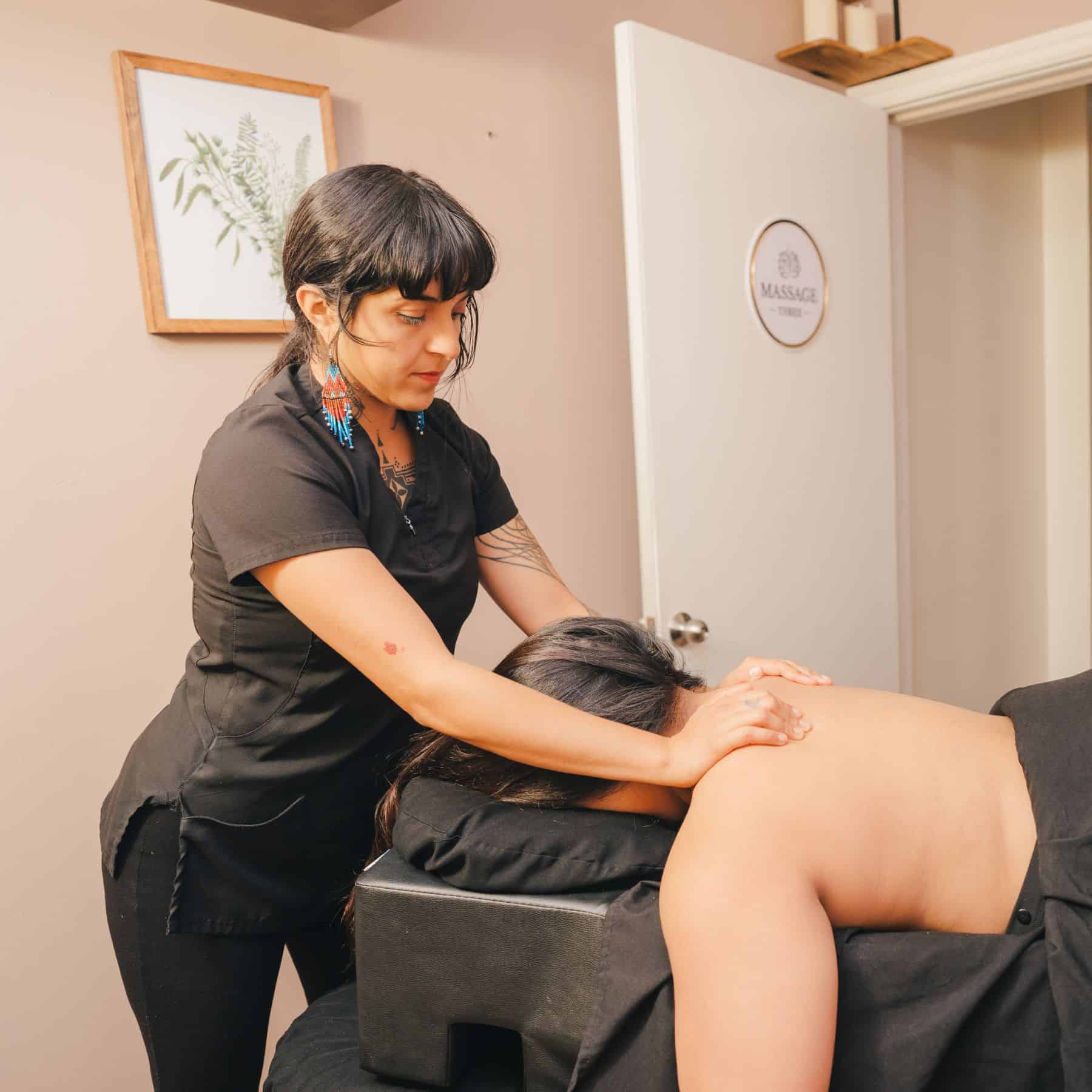
Massage therapy complements that process by helping the body fully relax. It encourages circulation, improves lymphatic flow (how your body removes toxins), and lowers cortisol levels so the body can shift out of “stress mode.”
While neither of these treatments can control your how and when your hormones change, they can help the body respond to hormonal shifts with greater ease. The result is a more relaxed and balanced experience as your body moves through these changes.
2) Naturopathic Medicine: Supporting Your Body’s Natural Rhythms
Naturopathic medicine is a form of integrative care that looks at how all the systems in your body work together. Instead of “fixing” hormonal changes, it focuses on supporting the body’s natural rhythms so you can move through each stage of menopause with more steadiness and comfort.
Naturopathic care often begins with personalized hormone testing—through blood, saliva, or urine—to help identify where imbalances exist and how they may be affecting your symptoms. Treatment is then tailored to your unique needs and may include bioidentical hormone therapy, herbal medicine, adaptogens, and targeted nutrition.
These therapies don’t reverse menopause—they help your body find balance within it. We recommend exploring them if you’re dealing with ongoing symptoms such as fatigue, sleep disruption, or mood changes.
3) Acupuncture and Chinese Medicine: Restoring Yin and Yang
In Chinese medicine, menopause isn’t seen as an ending, but as a Second Spring—a time of renewal and transformation. The goal during this stage is to bring the body back into balance by restoring harmony between yin (the body’s cooling, calming energy) and yang (its warming, active energy).
Acupuncture can be a powerful tool for easing this transition. It helps regulate body temperature, reduce hot flashes, calm the nervous system, and improve sleep quality. Many women also find that it helps relieve tension, anxiety, and the sense of internal heat that often comes with hormonal changes.
Herbal and dietary support are also key parts of this approach. And gentle movement practices such as qigong, yoga, or walking further support balance by improving circulation and calming the mind.
When your body is in balance, menopause becomes less about managing discomfort and more about renewal and reconnecting with yourself.
4) Pelvic Floor Physical Therapy: Strength, Stability, and Confidence
As hormone levels change during menopause, your pelvic floor can also be affected. The tissues in this area may lose some of their elasticity and strength, which can lead to symptoms like urinary leakage, pain, pelvic heaviness, or a sense of urgency.
Pelvic floor physical therapy is a gentle yet effective way to reconnect with this part of your body and restore strength, mobility, and comfort. Treatment may include individualized exercises, manual therapy, and education to help you retrain your muscles and improve pelvic alignment.
It’s often paired with strength training, vibratory therapy, or local vaginal estrogen—all of which can help you feel more stable and in control of your body again.
5) Yoga and Mindful Movement: Calming the Nervous System
Movement can be one of the most powerful ways to find balance during menopause. Yoga, in particular, helps calm the nervous system by lowering stress hormones and encouraging better circulation throughout the body.
Gentle, restorative practices are especially helpful. They can ease hot flashes, calm anxiety, and help steady your moods. Even a few minutes a day of mindful stretching or breathwork can make a noticeable difference in how you feel.
Breathing exercises such as Shitali Pranayama—a cooling breath—can help regulate body temperature and bring a sense of calm when heat or irritability arise.
Beyond emotional support, yoga also builds strength and protects your bone health, both of which are important during and after menopause.
6) Natural Skincare: Supporting Outer and Inner Radiance
As estrogen levels drop during menopause, the skin naturally loses some collagen and moisture. It may feel drier, thinner, or more sensitive than before. While these changes are normal, it can be frustrating and confusing when your usual routine no longer works.
Choosing natural products that strengthen the skin barrier can help restore hydration and softness. Look for ingredients like peptides, niacinamide, and hyaluronic acid, which support moisture and renewal without irritation.
A simple skincare ritual can also be grounding. Taking a few quiet minutes to cleanse, moisturize, and breathe can help you reconnect with your body and start or end the day with intention.
When approached this way, skincare becomes more than just a way to maintain your appearance. It’s a moment to reconnect with your body, and a daily reminder that you deserve to feel good in your own skin.
7) Mental Health Support: Caring for Your Inner Landscape
The emotional side of menopause often runs deeper than many expect. Along with symptoms like mood swings and anxiety, you may also feel a sense of loss, uncertainty about your identity, or grief for the version of yourself that feels like it’s slipping away.
All of these feelings are a natural response to a major life transition, and they deserve attention and care. Talking with a therapist or mental health professional who understands this transition can make a world of difference.
They can help you process your emotions, better understand yourself, and eventually come to see this phase as a time of growth and renewal.
You Don’t Have to Navigate This Alone
While there’s no one-size-fits-all solution for the symptoms that come with perimenopause and menopause, we hope this guide has given you a better understanding of your experience and the natural options available to help you find relief.
At Bixby Knolls Wellness Center, we’re committed to supporting women through every stage of this transition. Our team and affiliate providers offer a range of holistic treatments that work together to reduce stress, restore balance, and improve your overall well-being.
In-house and affiliate services:
- Chiropractic care
- Massage therapy
- Yoga therapy
- Naturopathic medicine - Dr. Lisa Fillis, ND (affiliate provider)
- Acupuncture - Dr. Mary Long, DACM, LAc (affiliate provider)
- Skincare - Dylan Kent, Licensed Esthetician (affiliate provider)
We also collaborate with trusted professionals who specialize in:
- Pelvic floor physical therapy - Dr. Stacie Groat, PT, DPT, OCS
- Mental health counseling and support - Sarah Kirk, LMFT
Have questions or want to learn more? Don’t hesitate to give us a call at (562) 219-4200. We’re here to help you find the care and support that fits your needs.